Rick's unlifted status
Klara and the SunRick’s unlifted status is not simply a fact about his place in an education system: it shapes how others receive him, narrows the routes open to him, and becomes a pressure point in his friendship with Josie. At a gathering organized for lifted children, his presence makes the boundary visible in a room full of peers; beyond it, the same status governs the practical question of whether he can obtain guidance and admission to college.
Identity and Social Position
Rick is Josie’s longtime friend and neighbor, but the distinction between them becomes socially conspicuous when he attends the children’s meeting at Josie’s home. The Mother tells Josie that children need practice getting along with their peer group and that, in her own generation, everyday contact with other children helped prepare them for college. Josie objects that this gathering is not made up of her friends and asks that Rick be invited if she must host it. The Mother agrees, describing Rick as a good person and their neighbor, while recognizing the importance of Josie’s request.
Once the meeting begins, the guests talk about Rick when he is no longer conversing with Josie. One girl explains that he is Josie’s friend and lives nearby; another suggests that the children should be nice to him because being among them must feel strange. Someone asks why Josie invited him, again framing his attendance as an uncomfortable exception. A girl then approaches with a dish of chocolates to make him feel welcome. The gestures are intended kindly, but their very deliberateness marks Rick as someone who does not automatically belong in the group.
That distinction is expressed more bluntly elsewhere at the gathering. A guest calls Rick bright, then laments that he has “missed out,” while another remarks on how well he presents himself and asks about his accent. The conversation turns to whether his parents chose not to proceed with lifting or lost their nerve. The Mother’s kind smile disappears; the speaker freezes and tries to apologize. Another guest calls the possibility “our worst fear,” making clear that Rick’s condition is not treated as an isolated circumstance but as a feared outcome shared by the parents present. The exchange exposes the stigma beneath the group’s language of inclusion: Rick is discussed as evidence of what might happen to their own children.
Education and Restricted Opportunity
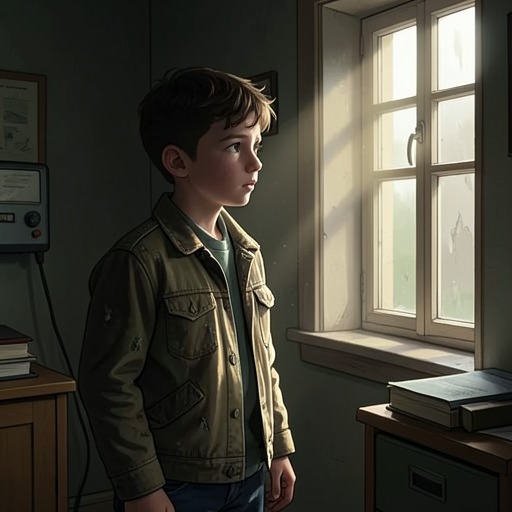
At the meeting, Rick names the division directly: he does not belong there because it is “a meeting for lifted kids.” His unlifted status is therefore not only a label applied by other people. Rick himself understands that the gathering’s social world has been organized around a category from which he is excluded, even as Josie has insisted on bringing him into it.
The Mother’s account of his educational prospects shows how that exclusion continues beyond childhood social life. Rick had been expected to receive home tutoring from screen professors, as other clever children did, but the arrangement became complicated. Members of TWE are forbidden to tutor unlifted students, while tutors outside the organization demand fees the family cannot afford. The Mother describes Atlas Brookings as the only proper college still admitting any unlifted students. Its commitment to the principle offers a route, but only a small number of places are available each year and competition is severe. Rick’s intelligence may help, she says, but the missing expert guidance is a serious obstacle.
Josie urges Rick to study harder and try for Atlas Brookings, but he points to the admissions limit: unlifted students make up less than two percent of its intake. She calls him smarter than the other unlifted applicants and insists he has a chance; he calls that chance theoretical. The contrast is not simply between optimism and pessimism. Josie sees his ability and wants him to act on it, while Rick measures that ability against a narrow institutional opening and the absence of the tutoring that might help him compete for it.
Friendship, Belonging, and the Future
The meeting also tests Rick’s relationship with Josie. He has come because she insisted, but when she turns to talk with the other children, he is left alone. He tells Klara that he had hoped Josie might stay the same, and worries that association with the lifted children will change her. In his view, her renewed talk about their plan reflects a fear that she, too, is changing. He casts himself as someone who must save her from the group, while Klara sees another possibility: the children may be unkind in their roughness, but they are also afraid of loneliness. Her response connects Rick’s outsiderhood with the children’s own need to belong rather than reducing the conflict to a simple division between kind and cruel people.
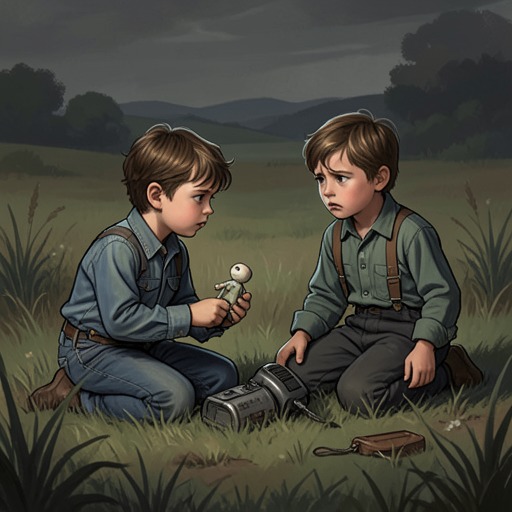
The future Rick and Josie imagine together is repeatedly set against the separate paths their circumstances make available. Josie presses him to apply to Atlas Brookings, but his unlifted status makes that goal uncertain. When Rick later presents his self-devised drone system and his college ambition, he acknowledges that he has worked without tutors and has used online sources and books his mother ordered. He describes Atlas Brookings as a college that might be open to talented students who have not benefited from genetic editing. The possibility remains important, but the evidence of his work also shows him building skills under conditions that deny him ordinary expert support.
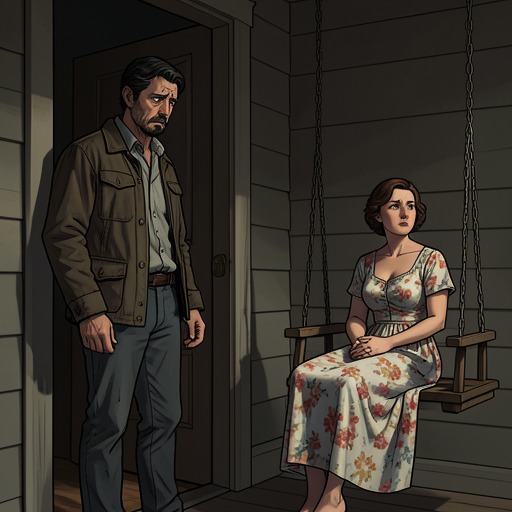
The Mother’s later challenge to Rick reframes what it means to have chosen the safer course. She contrasts Josie’s high-stakes gamble with his decision to play safe and asks whether he truly feels like a winner. The argument places their unequal risks beside one another: Josie’s decision was made for the possibility of a future, while Rick’s caution may leave him with a smaller life than he imagines he has secured. It is the Mother’s judgment, not a neutral measure of Rick’s achievement, and it reveals how deeply the question of being lifted has entered the family’s account of their choices.
Later Life and Significance
After Josie recovers, her family’s plans for college occupy more of her attention. Atlas Brookings is rarely mentioned once Rick no longer wishes to attend it, and Josie and her mother disagree over which college she should choose. Rick continues to visit at first, but comes less often as Josie spends time away preparing for college and he becomes occupied with projects and new friends. He buys a car, which he names the Wreck, and drives to the city; eventually, its presence on the loose stones becomes a more regular sign of his visits than Rick himself. The account records a change in the children’s proximity without suggesting that one status or one decision alone explains their later lives.
Rick’s experience makes the novel’s social boundary concrete in several connected settings: the lifted children’s meeting, the tutoring system, and the college admissions process. His intelligence and poise do not erase the distinction attached to being unlifted, just as the possibility of admission does not make access equal when places are scarce and tutors are barred or unaffordable. Through Rick, exclusion appears not as a single insult but as a chain of social assumptions and institutional limits, resisted in part by the care of his mother, Josie’s insistence on his presence, and his own effort to develop a project without expert guidance.